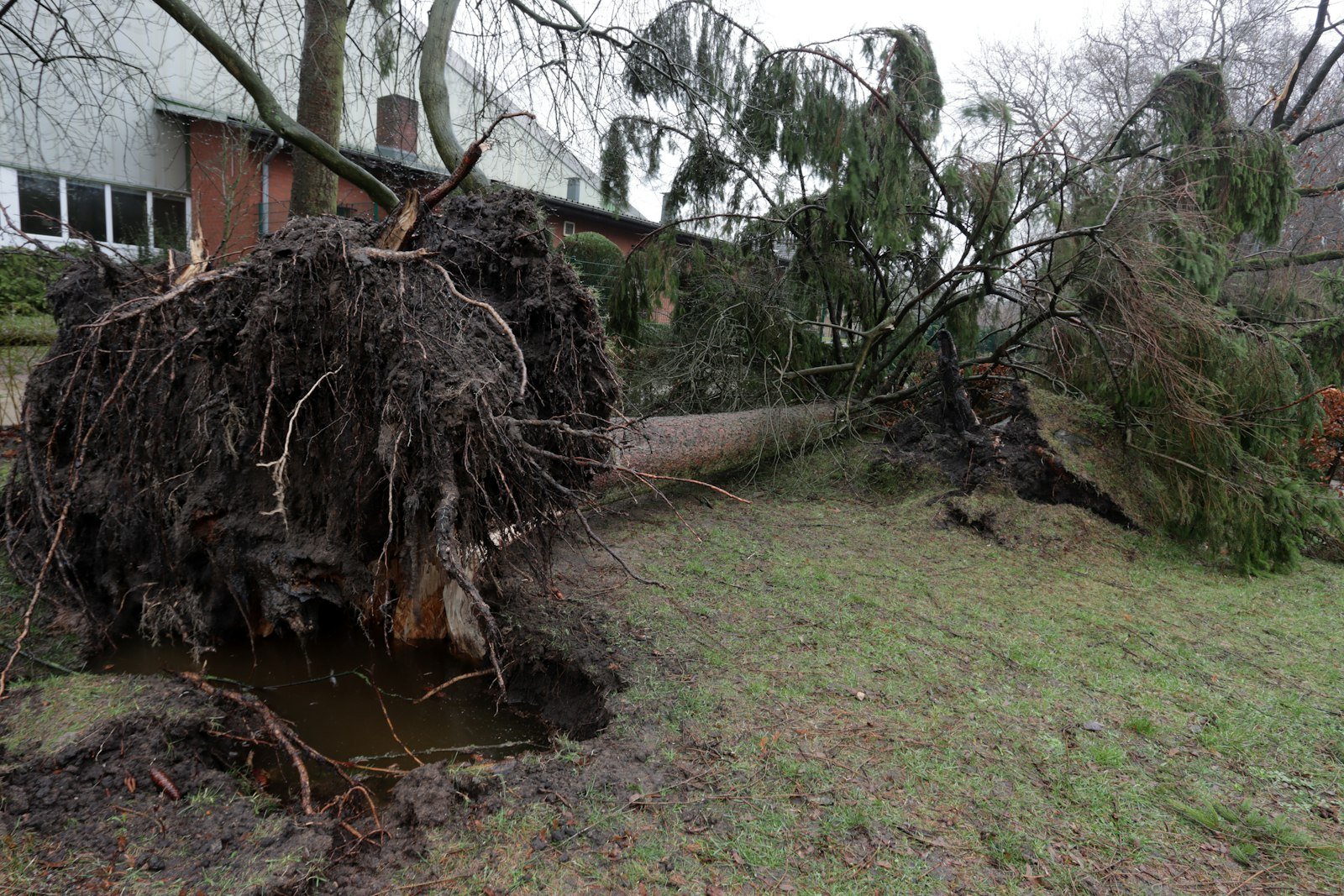
When a storm rolls through Hartford, a fallen tree can go from a nuisance to an emergency in seconds. Limbs come down on roofs, trunks block driveways and wires end up tangled in branches. What you do in the first hour matters for your safety, your property and your insurance claim.
This guide walks Hartford-area homeowners through what to do first, who to call, how emergency tree removal works and who usually pays. CT Tree Work LLC provides 24/7 emergency tree removal across Hartford County. Call (860) 795-6196 any time.
First, make everyone safe
Before you think about the tree, think about people. Storm damage often hides hazards that aren’t obvious from the window.
- Assume every downed wire is live, even if your power is out. Stay at least 30 feet away and keep kids and pets inside.
- If a line is down or a tree is resting on a wire, call 911, then report it to Eversource at 800-286-2000 (or text OUT to 23129 if you’re signed up for Eversource text alerts).
- If a tree has come through the roof or a wall, get everyone out of that part of the house. Call 911 if you smell gas or see structural damage.
- Don’t climb onto the roof or start cutting. Storm-damaged trees are often under tension, and a cut in the wrong place can make a trunk or limb spring back or roll.
Who to call in Hartford: the utility, the city or a tree service
Who handles a fallen tree in Hartford depends on where it is and what it’s touching.
Trees touching power lines
Anything involving wires belongs to Eversource first. A tree service can remove the tree once the utility has made the lines safe, but no one should cut a tree that is in contact with energized lines.
Street trees and trees on city property
Trees along city streets, including many in the strip between the sidewalk and the curb, usually belong to the City of Hartford. For a fallen or hanging street tree, contact the city through Hartford 311 and its Forestry Division. If you live in West Hartford, Wethersfield, Newington or another nearby town, your town’s public works department handles its own street trees.
Trees on your property
A tree that falls from your yard onto your house, garage, fence or driveway is yours to deal with, and that’s where a private tree service comes in.
Document the damage for insurance
Before any cleanup starts, take clear photos and video from a safe distance:
- Wide shots that show the whole tree and where it landed
- Close-ups of damage to the roof, siding, gutters, fences or vehicles
- The stump or broken base, which helps show whether the tree was healthy
- Receipts for emergency tarps, board-up work or tree removal
Call your insurance company as soon as you can. Insurers generally expect you to take reasonable steps to prevent further damage, such as tarping a hole in the roof. Ask your tree service for photos and a written invoice that describes the work, since your adjuster will want both.
Who usually pays for a fallen tree?
Every policy is different, so your insurance agent has the final word. In general, though, Connecticut homeowners run into these situations:
- The tree hit your house or another covered structure. Homeowners insurance usually helps pay for the damage and for removing the tree from the structure, often up to a set limit for tree removal.
- Your neighbor’s tree fell on your house. Your own policy usually handles the claim. If the tree was clearly dead or dangerous and the owner ignored it, the insurers may sort out liability between them.
- The tree fell in your yard and didn’t hit anything. Removal is often not covered. Some policies do pay to clear a tree that blocks your driveway or a wheelchair ramp, usually with a small limit.
- A city street tree fell. Report it to the city first, and keep a record of the damage and of your report.
Tree down on your Hartford property?
Our crew responds 24/7 to storm damage across Hartford County, from trees on roofs to driveways blocked by fallen trunks.
Call (860) 795-6196 for emergency tree removal
What emergency tree removal looks like
Emergency work is slower and more careful than a routine removal, because the tree is already under stress and is often resting on something valuable. A typical storm call goes like this:
- Assess the scene. The crew checks for wires, damage to the structure and how the tree’s weight is resting before anyone makes a cut.
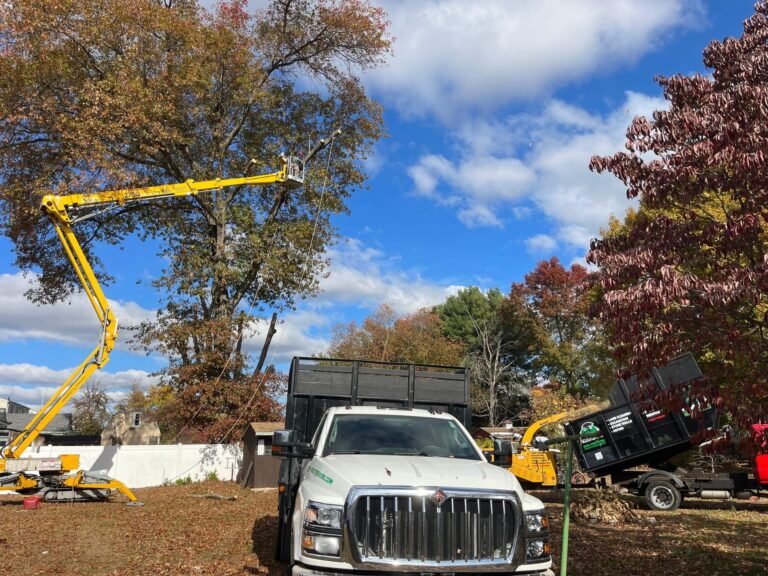
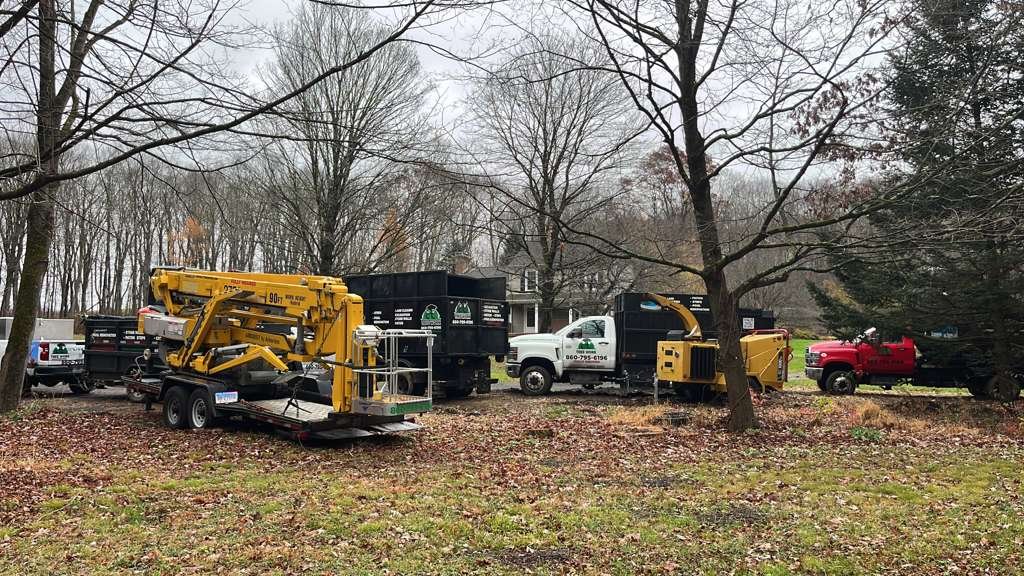
- Take the weight off. Using an aerial lift and rigging, the tree comes down in controlled sections so nothing drops or rolls onto the roof.
- Make it safe and passable. Driveways and walkways are cleared, and hanging limbs that could still fall are removed.
- Clean up. Branches are chipped and debris is hauled away so your yard is usable again. Stump grinding can be scheduled once things settle.
Prevent the next emergency
Most trees give warning signs before they fail in a storm. Before the worst of nor’easter and ice storm season, walk your property and look for:
- Dead or hanging limbs over the roof, driveway or play areas
- Trees leaning toward the house, especially if the lean is new
- Cracks or splits in the trunk or where large limbs meet
- Mushrooms, soft wood or cavities at the base
- Ash trees thinning from the top, a common sign of emerald ash borer in Hartford County
If you spot any of these, it’s usually safer, and often less expensive, to deal with the tree on your own schedule than after it fails, and winter is often the smartest time for tree removal in Hartford. Our guides to winter tree care and tree removal in Hartford explain what to look for in more detail.
Emergency tree service across the Hartford area
CT Tree Work LLC handles storm damage and emergency tree removal in Hartford and nearby towns, including West Hartford, East Hartford, Wethersfield, Newington, Glastonbury, Farmington, Bristol and Southington, as well as communities across Litchfield, New Haven and Fairfield counties. Learn more about our tree removal services.
Call (860) 795-6196 any time, day or night, or request an estimate online.